Circle Wave Line Border: A Versatile Design Element
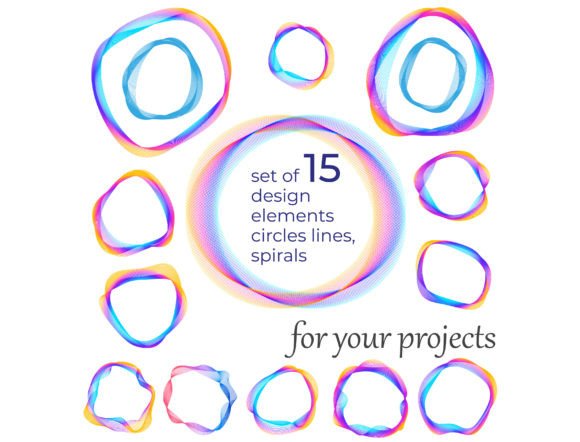
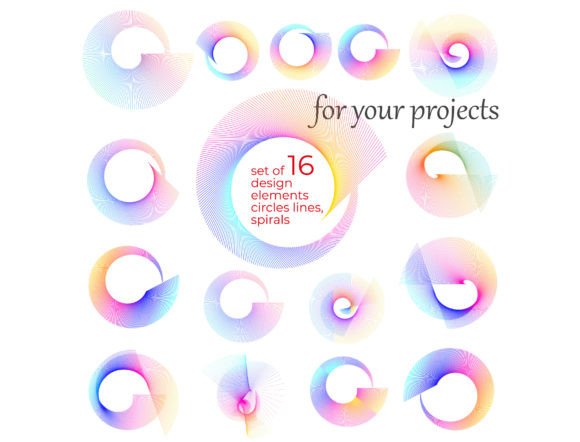
The circle is one of the most fundamental and enduring shapes in visual communication. Its simplicity conveys unity, wholeness, and infinity. When combined with dynamic line work and wave motifs, it transforms into a modern and adaptable graphic asset. Circle Wave Line Border refers to a specific category of design elements that feature circular forms integrated with flowing, undulating lines or borders. These are typically provided as vector files, such as EPS, allowing for infinite scaling and customization without loss of quality.
These assets are not single-use graphics but foundational components for a wide range of creative and professional projects. The zip file containing EPS formats signifies a ready-to-use toolkit, offering designers and creators a starting point that balances structured form with organic movement.
Understanding the Appeal and Core Benefits
Individuals exploring graphic resources like Circle Wave Line Border elements are often seeking to solve specific design challenges or elevate their work efficiently. The primary interest stems from several inherent benefits.
- Versatility Across Media: The vector nature of EPS files makes these elements suitable for both digital and physical applications. From a tiny icon in a mobile app interface to a large-scale print on packaging or wall art, the design remains crisp.
- Stylish Efficiency: Creating complex, harmonious line work from scratch requires significant time and skill. Using a pre-designed, editable element provides a foundation that can be adapted, colored, and combined, accelerating project timelines while maintaining a contemporary aesthetic.
- Conceptual Flexibility: The combination of circle and wave can symbolize a variety of concepts—technology and flow, nature and cycles, connection and communication—making it applicable to diverse industries from tech startups to wellness brands.
A key practical benefit is the reduction of technical hurdles. For those less proficient in advanced illustration software, having a clean, scalable vector file allows for basic modifications like color changes or simple integrations without needing to draw the complex paths manually.
Considerations and Potential Trade-offs
While the advantages are clear, a balanced evaluation requires acknowledging considerations and trade-offs. A primary consideration is the need for compatible software. EPS files are best edited in professional graphic design programs like Adobe Illustrator or Affinity Designer. Users relying solely on basic image editors may find the file format inaccessible without conversion.
Another consideration is originality. Although the element itself is stylish, its use in a very popular or generic form could risk blending in rather than standing out, depending on the market. This trade-off between efficiency and uniqueness is central. The asset provides a strong starting point, but the final project's distinctiveness will depend on how creatively it is modified and combined with other original content.
Expectations should also be calibrated regarding the "zip file" delivery. These are typically raw graphic files, not templates with layered text or pre-built layouts. The user is responsible for integrating the element into their specific card, logo, website, or presentation. The value lies in the graphic quality and editability, not in a complete, plug-and-play solution.
Situations Where Circle Wave Line Border Is a Strong Fit
This design element aligns particularly well with projects that require a blend of modern geometry and organic softness.
- Branding for Dynamic Industries: Companies in fields like clean energy, digital finance, or creative agencies often seek visuals that represent innovation, flow, and connectivity. A customized Circle Wave Line Border can serve as a core logo component or a recurring brand motif.
- Enhancing Educational and Presentation Materials: For infographics, slides, or instructional content, these elements can visually break up text, illustrate cyclical processes, or create visually appealing section dividers that improve comprehension and retention.
- Decorative Applications with a Modern Twist: In interior design mood boards, custom print creation, or scrapbooking, the element offers a way to incorporate a contemporary, graphic art style that is more structured than free-form illustration but softer than stark geometric patterns.
It is also a pragmatic choice for designers working under tight constraints who need a reliable, scalable decorative border or frame element for web design, app UI embellishment, or card making, where consistency across different sizes and resolutions is paramount.
When Alternatives Might Be Worth Considering
Despite its versatility, there are scenarios where other options might better serve a project's goals. If the core requirement is a fully unique and signature illustration with no pre-existing components, commissioning original art from an illustrator would be a more appropriate path, albeit at a higher cost and longer timeline.
For projects demanding extreme simplicity or a minimalist aesthetic that avoids any decorative flourish, a basic, unadorned circle or a simple line might be more suitable than the more elaborate Circle Wave Line Border. The wave integration adds visual complexity, which might clash with a strict minimalist directive.
Additionally, if the primary output medium is a environment where vector scalability is not a concern—such as a one-time, low-resolution social media post—a simpler PNG or JPEG graphic might suffice, avoiding the need to handle vector file formats.
Practical Decision-Making Insights
To determine if Circle Wave Line Border elements align with your needs, a structured self-assessment is helpful. Begin by auditing your technical capacity: Do you or your team have access to and basic proficiency with software that can edit EPS vector files? Next, analyze your project's visual tone: Does the modern, flowing geometry match the desired emotional or conceptual message?
Consider your balance between time, budget, and originality. These assets sit in a middle ground—they are more unique than basic stock photos but more efficient and affordable than fully custom illustration. Evaluate your project's scale: Are you creating a single item or a suite of coordinated materials? The vector asset's scalability makes it powerful for large, multi-format projects.
Finally, review the specific contents of the zip file offer. Not all "circle wave" designs are identical. Look for variety in complexity, line weight, and composition to ensure the provided files offer the range of options you need for adaptation. The goal is not just to use a graphic, but to own and manipulate it to serve your specific purpose.
Aligning the Element with Your Creative Goals
In conclusion, Circle Wave Line Border design elements represent a practical tool for a broad creative audience. Their value is not merely as a decorative image but as a flexible, high-quality resource that can be decomposed, recolored, and integrated into larger systems. They are strongest when used as a foundational component in projects that benefit from a contemporary aesthetic blending structure and flow.
The decision to utilize them hinges on a match between the project's requirements for versatility and scalability, the creator's technical ability to manipulate vector files, and the desired balance between design efficiency and final originality. By understanding both the benefits and the considerations, individuals researching graphic assets can make an informed choice, determining whether this versatile element is a fitting cornerstone for their next design, presentation, or creative endeavor.