Navigating the Universe of Digital Assets: Spacecraft, Rocket, and Satellite Media Files Explained
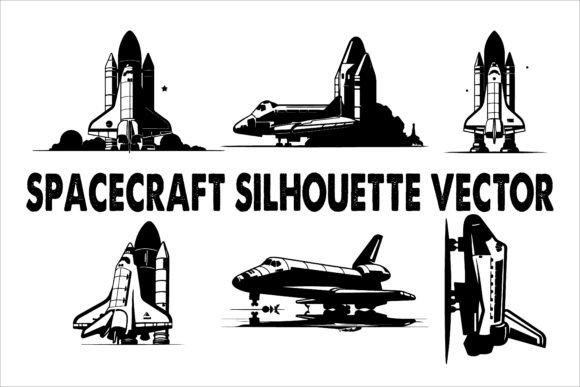
When sourcing digital media for projects, the categories of spacecraft, rocket, and satellite imagery represent a distinct and powerful niche. These are not just generic icons or stock photos; they symbolize human achievement, cutting-edge technology, and the vast frontier of exploration. The availability of comprehensive file packages—including editable EPS vectors, transparent PNGs, and high-resolution JPGs—transforms these assets from simple pictures into versatile tools for creators, educators, and marketers alike.
Understanding the Distinct Nature of Space Media Assets
What sets a collection of spacecraft, rocket, and satellite files apart from general vector packs? Primarily, it is their specificity and technical resonance. A well-designed vector of a Space Shuttle or a Mars Rover carries intrinsic meaning related to science, precision, and innovation. Unlike a generic business icon, these assets communicate concepts directly tied to aerospace engineering, exploration, and futurism. Their utility extends beyond mere decoration; they serve as visual shorthand for complex ideas in fields ranging from education to corporate branding for technology firms.
The technical distinction lies in the file formats offered. An EPS file provides complete editability, allowing you to deconstruct a Satellite illustration to modify components like antenna arrays or solar panels. A Transparent PNG offers seamless integration into any digital layout without a bounding box, perfect for overlaying a Rocket silhouette on a website header. The high-resolution JPG delivers photographic quality for print media where fine detail is crucial, such as depicting the intricate texture of a Space Station module. This multi-format approach addresses the core need for adaptability across different media.
Comparing Utility with Other Visual Asset Categories
Evaluating where a spacecraft, rocket, and satellite media pack fits requires comparing it to other common visual resources. Broadly, there are two main alternatives: generic illustration bundles and specialized technical or scientific imagery.
Generic bundles offer wide applicability—common symbols for business, nature, or people. Their strength is versatility, but their limitation is a lack of deep thematic connection. They cannot authentically represent a discussion on orbital mechanics or deep space communication. Conversely, highly specialized scientific imagery, such as detailed astronomical charts or proprietary engineering diagrams, offer depth but often lack the design-conscious editability and format variety. The curated pack of space assets sits in a valuable middle ground: sufficiently technical to be authoritative, yet sufficiently designed and multi-formatted to be practically useful across many applications.
Strengths and Practical Tradeoffs
The primary strength of a comprehensive set is its all-in-one readiness. Having an EPS, PNG, and JPG of the same Lunar Module means you can use it in a printed brochure (JPG), a web animation (PNG), and a customized presentation slide (EPS) without sourcing three different files. This saves significant time and ensures visual consistency.
A tradeoff, however, is the thematic focus. These assets are not a substitute for a full library of diverse icons. If your project only tangentially touches on space themes, this specialized pack might be less useful than a more general collection. Its value is proportional to your need to communicate ideas related to aerospace, science, exploration, or futuristic technology.
Key Decision Factors and Best-Fit Situations
Determining if this type of media pack is the right choice involves assessing a few key factors. Consider your project's core theme, the required formats for your deliverables, and the need for customization.
This collection is an excellent fit for projects directly involving space topics. For an educational website about the Apollo missions, transparent PNGs of a space capsule could serve as interactive elements. For a conference presentation by an aerospace industry professional, editable EPS files allow customization to match specific company colors or add proprietary logos to a rocket vector. The high-resolution JPGs are ideal for high-quality print materials for organizations like NASA or ESA affiliates, or for museum exhibit panels.
It is also a strong fit for metaphorical or inspirational use. A rocket silhouette can symbolize growth and launch in a corporate report; a satellite can represent connectivity in a tech startup's branding. The inherent symbolism of these objects extends their use beyond literal aerospace contexts.
When to Consider Another Option
You may need to look for alternative resources if your project requires a very broad set of unrelated icons—for example, a general user interface kit needing symbols for finance, healthcare, and shopping alongside technology. Similarly, if you require extremely detailed, photorealistic renders of specific, contemporary spacecraft like a particular SpaceX launch vehicle, a specialized 3D model or licensed photograph might be more appropriate than a generic vector. The pack excels at providing recognizable, stylized representations, not hyper-specific, photo-accurate depictions of current proprietary technology.
Realistic Applications Across Industries
The practical use cases for these files are vast, mirroring the versatility of the formats provided. In graphic design, a designer creating a poster for a science festival could use the editable EPS files to seamlessly integrate a space probe and space station into a complex layout, adjusting colors to fit the festival's palette. For web design, the transparent PNGs are perfect. A website dedicated to space exploration news could use a satellite PNG as a recurring section divider, or an animated orbiter as a loading icon.
In educational materials, an instructor building an infographic on space travel history can use the vectors to create a timeline from the Lunar Module to the Mars Rover. The ability to edit the EPS files means they can be simplified or annotated for different age groups. For product packaging in the tech sector, a company selling a high-performance router could use a stylized satellite JPG on the box to imply superior range and connectivity.
Even in art projects, the assets offer a foundation. A muralist could use the high-res JPGs as reference, or a digital artist could incorporate transparent PNGs of astronauts and spacecraft into a mixed-media collage. The core benefit is that the same visual asset can transition from a digital screen to a printed t-shirt to a large-format banner without losing quality or requiring separate sourcing.
Making an Informed Choice for Your Project
Ultimately, selecting a media pack centered on spacecraft, rocket, and satellite imagery is a decision about thematic alignment and production efficiency. If your work—whether commercial, educational, or creative—regularly engages with themes of innovation, exploration, science, or future technology, this specialized collection provides a coherent visual language. The inclusion of all three major file types (EPS, PNG, JPG) removes technical barriers, allowing you to focus on application rather than file conversion or adaptation.
Compare this to sourcing individual files from disparate platforms, which often results in inconsistent styles, mixed resolutions, and licensing complications. A unified pack ensures stylistic harmony between your rocket, your spacecraft, and your satellite imagery. However, always balance this convenience against the scope of your needs. For a one-time, minimal use, a single PNG download might suffice. For ongoing projects, branding initiatives, or comprehensive educational content where these themes are central, the multi-format, all-in-one approach represents a practical and professional solution that supports a wide spectrum of visual communication goals.