What Makes a Great Software and Development Icon Pack?
In the digital world, where interfaces and visual communication reign supreme, icons are more than just decorative pixels. They are a fundamental language. For professionals designing websites, building mobile apps, or creating presentations, having a cohesive, high-quality set of icons is crucial. This is where specialized icon packs, like a comprehensive Software and Development Icon Pack, become invaluable assets. This article explores the purpose, features, and significant role these icon sets play in modern digital design and development workflows.
The Visual Language of Tech: Why Icons Matter
Before diving into the specifics of an icon pack, it's important to understand the why. Icons serve as visual shorthand. In user interfaces, a well-designed icon for "settings," "database," or "cloud upload" conveys functionality instantly, often without needing text. They reduce cognitive load for users, enhance aesthetic appeal, and establish a professional tone. For software developers, designers, and analysts presenting their work, icons help illustrate concepts, frameworks, and services quickly and elegantly. A generic set of icons might suffice for basic needs, but the tech industry operates with specific tools, languages, and services—which demands a more tailored visual vocabulary.
From Generic to Specific: The Purpose of a Development-Focused Pack
A general icon pack might include symbols for email, phones, and houses. A Software and Development Icon Pack, however, delves into the niche. Its purpose is to provide clear, recognizable symbols for popular programming languages (like Python, JavaScript, or C++), development tools (Git, Docker, Kubernetes), services (AWS, Google Cloud, Firebase), and abstract concepts (API, Agile, Blockchain). This specificity saves immense time for creators. Instead of sketching a custom icon for "React" or trying to represent "machine learning" with a generic graphic, they have a professionally designed, consistent symbol ready to use. This pack bridges the gap between technical content and accessible visual communication.
Dissecting the Features: What "200 Stylish Icons" Really Offers
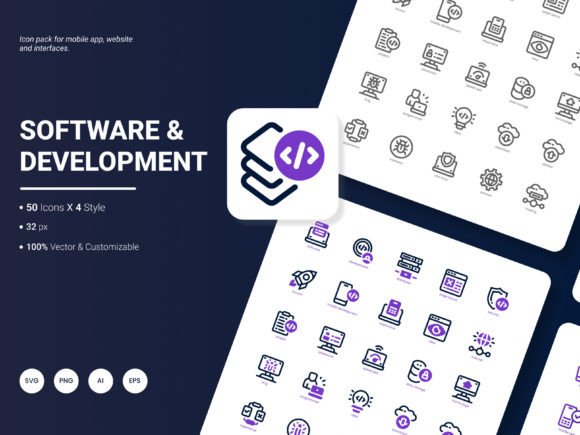
The core promise of such a pack is its content: 200 stylish icons showcasing popular services and ideas. This volume is significant. It covers a broad spectrum, ensuring that whether you're designing a landing page for a SaaS product, creating an infographic about cybersecurity, or building a slide deck for a tech conference, you'll likely find the icon you need. The style—described as "amazingly fresh and trendy"—is equally important. Tech aesthetics evolve rapidly. A pack with a modern, clean, and slightly trendy look ensures your projects feel current and engaging, not dated or clichéd.
Practical Relevance: Formats, Editability, and Integration
The true utility of any digital asset lies in its flexibility. A pack offering icons in multiple file formats (AI, EPS, SVG, PNG, PDF, JPG) is designed for universal application. Here’s what that means in practice:
- SVG & AI/EPS: These are vector formats. They are scalable to any size without losing quality, perfect for web design (SVG) and professional graphic editing in Adobe Illustrator (AI/EPS). They are the foundation for editable icons, allowing you to change colors, sizes, or even modify elements to better suit your brand.
- PNG & JPG: These are raster formats, providing ready-to-use pixel-based images at common resolutions for quick placement in presentations, documents, or mockups.
- PDF: Useful for integrated document design and printing.
The mention that icons are "easily edited" and can be "flexibly integrated" speaks directly to the user's need for control and efficiency. You aren't just buying static images; you're acquiring adaptable design components that fit into your unique workflow.
Fitting into Modern Digital Life: Use Cases Across Fields
The application of a Software and Development Icon Pack extends far beyond just a designer's toolkit. It fits seamlessly into various aspects of modern professional and creative life.
Website Design & Mobile Applications
For UI/UX designers and front-end developers, these icons provide immediate visual elements for navigation menus, feature lists, service showcases, and tutorial screens. An app explaining its use of "Node.js" and "MongoDB" can use precise icons instead of text-heavy explanations, creating a cleaner, more intuitive interface.
Presentations & Analytical Reports
In the corporate and educational spheres, technical presentations and data reports need to be compelling. A slide about "project architecture" populated with icons for servers, databases, and programming languages becomes more digestible. Analysts can use icons in reports to categorize data by technology type, making complex information visually scannable.
Infographics & Templates
Content creators and marketers use infographics to simplify complex tech topics for broader audiences. A set of predefined, stylish icons for "Artificial Intelligence," "Cyber Security," and "DevOps" accelerates the creation process and ensures visual consistency. Similarly, template designers for platforms like Canva or PowerPoint can integrate these icons to create tech-focused template kits, reselling or distributing them as premium content.
Clarifying Common Misunderstandings
There are a few assumptions worth addressing about such icon packs. First, some might think "200 icons is overkill." In reality, breadth prevents creative blockage. Having options for both mainstream and niche technologies means the pack remains useful for diverse projects over time. Second, a misconception exists that "vector icons are only for professional designers with expensive software." While AI and EPS files require Adobe Illustrator, the inclusion of SVG is a game-changer. Many free or low-cost design tools (like Figma, Inkscape, or even modern web code editors) support SVG, making the editable feature accessible to a wider audience, including developers who dabble in design.
Beyond Decoration: Icons as Part of the Content Strategy
Perhaps the biggest shift in understanding is viewing icons not as mere decoration but as integral parts of content strategy and user experience. In a crowded digital space, visual clarity helps establish brand authority and trust (E-E-A-T). A startup using a polished, consistent set of icons to explain its tech stack appears more professional and credible than one using mismatched, low-quality graphics. The icons help communicate expertise.
Building a Broader Understanding: The Ecosystem of Digital Assets
Recognizing a Software and Development Icon Pack as a vital digital asset places it within a larger ecosystem. It complements other resources like stock photography, UI component libraries, and font families. For a holistic project, a designer might combine a modern font, a color palette, this icon pack, and a set of UI cards to build an entire brand identity or project prototype. Understanding this interconnectedness helps professionals curate better toolkits and work more efficiently.
Looking Forward: The Evolution of Icon Packs
The field of software and development is not static. New frameworks, tools, and paradigms emerge constantly. Therefore, an icon pack must also evolve. Feedback from users is critical for this growth. Suggestions for a future update might include:
- Expanding into Emerging Tech: Icons for newer domains like Quantum Computing, Low-Code Platforms, or Specific Metaverse Concepts.
- Increased Style Variations: Perhaps offering the same set in different aesthetic themes—like a "dark mode" variant, a more "hand-drawn" sketch style, or a "3D isometric" version.
- Contextual Sets: Sub-packs focused on specific verticals within tech, like "FinTech Icons," "Health Tech Icons," or "EdTech Icons," featuring more specialized symbols.
- Animation Ready Files: Providing icon elements in layered formats or offering simple animated SVG sequences for micro-interactions on websites.
- Accessibility Considerations: Guidelines or alternative designs that ensure icons are clear and distinguishable for users with visual impairments, reinforcing inclusive design.
The request, "Please write us any suggestions on what we should include in our next update," is a smart engagement that builds a community around the product and ensures it stays relevant and helpful.
Conclusion: More Than Just Pictures
A comprehensive Software and Development Icon Pack is a strategic tool. It empowers clearer communication, accelerates design processes, and elevates the professional quality of any tech-related visual project. By providing a large set of trendy, editable icons in multiple formats, it addresses the practical needs of designers, developers, educators, and content creators alike. As the digital landscape grows, the visual language we use to describe it must grow in tandem, making such focused resources not just convenient, but essential.